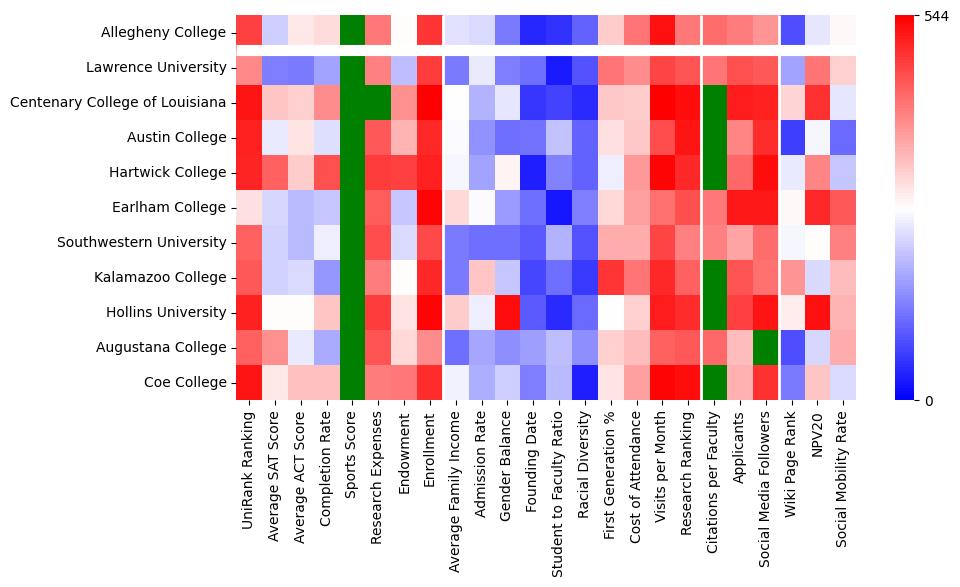
Allegheny College, located in Meadville, Pennsylvania, was founded in 1815, making it one of the oldest liberal arts colleges in the United States. Its long-standing history is peppered with traditions and a commitment to fostering a diverse and inclusive environment. The college is set on a picturesque campus that spans over 560 acres, offering students a serene setting to pursue their studies. Allegheny is affiliated with the United Methodist Church but maintains a nonsectarian approach to education, welcoming students from all backgrounds.
What sets Allegheny College apart is its emphasis on interdisciplinary learning and the development of unconventional combinations of majors and minors. The college encourages students to explore multiple fields of study, which fosters creativity and innovation. This unique approach is supported by the Allegheny College Prize for Civility in Public Life, which highlights the institution’s commitment to ethical thinking and civil discourse. Furthermore, Allegheny is recognized for its focus on undergraduate research, providing students with ample opportunities to engage in hands-on learning experiences alongside faculty mentors.
Academically, Allegheny College is known for its rigorous curriculum and strong emphasis on writing and communication skills. The college's academic programs in Environmental Science, Psychology, and Political Science are particularly well-regarded. The Environmental Science program benefits from the college’s location near diverse ecosystems, offering students experiential learning opportunities in the field. Psychology students have access to state-of-the-art laboratory facilities, while Political Science majors often engage in internships and study-away programs that provide real-world experience.
On the downside, Allegheny College faces some challenges that prospective students should consider. The college has a relatively high tuition cost, which can be a barrier for some, although it does offer financial aid to help offset expenses. Moreover, while the small-town setting provides a tight-knit community, it may lack the cultural and entertainment amenities found in larger cities, which could be a drawback for students seeking a more urban experience. Additionally, some students have reported concerns about the college’s aging infrastructure, noting that some facilities are in need of modernization.